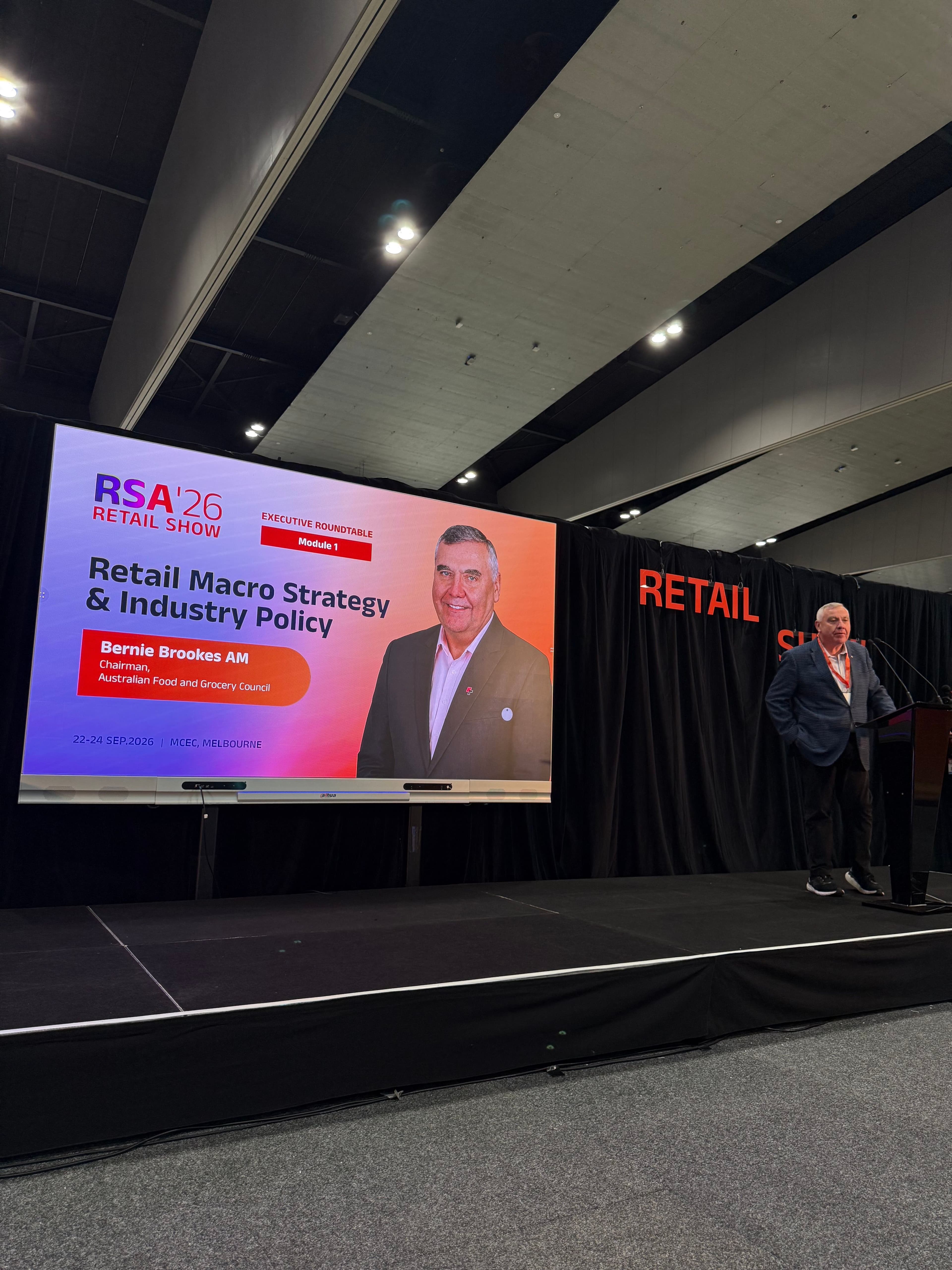
Last week I shared some thoughts about how AI affects the customer journey after I attended the Retail Show Australia. And one thing that stuck with me afterwards was just how much pressure businesses are under right now.
Bernie Brookes AM laid out the reality for retailers pretty clearly: customers have less money to spend, energy and workforce costs are up, and productivity is a problem. Then add cash flow, stock, delivery, cyber security, AI, regulation, compliance and everything else businesses are expected to deal with. And somewhere in the middle of all of that you still have to grow.
The obvious response when things get tough is to cut. Cut marketing, put the website project on hold, delay the customer experience work. Pause the technology investment, do less brand work, freeze anything that doesn’t feel immediately essential… I could go on. And of course I understand why, but I’m not sure cutting across the board is always the answer.
Customers are under pressure too
This isn’t only a retail problem. Think about energy, internet or insurance. Customers are looking harder at what they spend. They’re comparing more, they’re questioning whether they’re getting good value, they’re more willing to move if something better comes along. And increasingly, technology is doing some of that work for them.
An energy customer can compare plans. An insurance customer can compare cover, exclusions and price. Someone choosing an internet provider can look at speed, service, reviews and pricing without talking to anyone. AI will only make that comparison easier. So while businesses are cutting back, customers are becoming more selective, less patient and better informed. That creates a pretty interesting problem.
Loyalty based on inconvenience won’t last forever
A lot of businesses probably have more “loyal” customers than they realise who are actually just busy. They haven’t changed their energy provider because it’s annoying. They haven’t reviewed their insurance because it takes time. They stay with their internet provider because switching feels painful. That’s not necessarily loyalty, that’s friction. And as AI, comparison tools and better digital experiences remove more of that friction, customers will find it easier to move.
That means experience matters more, not less. If your product is confusing, your service is difficult, your website is painful, or your pricing doesn’t make sense, there are fewer places to hide.
Before cutting, find where growth is actually leaking
This is why I keep coming back to customer journey mapping. Not as a nice CX exercise or yet another workshop where everyone puts Post-it notes on a wall and then forgets about them. Done properly, it should show you where the business is losing customers, money and time. Where are people dropping out? Where are they getting confused? Where do they lose trust? Where are you paying to acquire someone who never converts? Where are existing customers calling because the digital experience failed? Where are internal teams doing manual work that should not exist? Where are customers leaving when they renew, rebuy or reconsider their options?
Those are growth problems, and they’re often sitting across different departments. Marketing might see a conversion problem. Customer service sees more calls. Operations sees more manual work. IT sees another integration request. Finance sees increasing cost. But the customer sees one business – and they don’t care which department owns the problem.
Different industries. Same leaks.
The actual problem looks different depending on the business. For an energy company, it might be a confusing plan comparison, a painful sign-up, poor onboarding, an unexpected bill or a support experience that takes three calls to fix.
For insurance, it might be a quote form that asks too much, policy wording nobody understands, a claims process that destroys trust or a renewal increase without enough explanation. For internet, it might be confusing plans, installation delays, outages, poor support or making it harder to change plans than it needs to be. For retail, it might be stock, delivery, returns, loyalty, checkout or personalisation that doesn’t feel personal at all.
Different industries, but the same question: Where in the journey are we giving customers a reason to leave? Cutting the wrong thing can create another leak, which is where broad cost cutting can become dangerous.
Cutting marketing might lower spend today but reduce demand six months from now.
Cutting customer service might improve one cost line while increasing churn. Putting off a technology improvement might save money this quarter but leave staff doing hundreds of hours of unnecessary manual work. There are absolutely things businesses should stop spending money on. But the question should be: What is actually helping growth, and what isn’t? Not: What can we cut fastest? There’s a big difference.
Start with the journey
At Mo Works, we keep coming back to the customer journey because it connects things that businesses often treat separately. Brand. Marketing. Digital. Technology. Operations. Customer experience. They all show up in the same journey eventually. And in a tougher market, understanding that journey becomes more important. Because in a strong market, businesses can sometimes grow despite friction. In a difficult market, the friction becomes very visible very quickly. So before deciding where to cut, I’d start somewhere simpler. Map the journey. Find where customers are dropping off. Find where trust is being lost. Find where the business is wasting time. Then decide where to stop spending — and where you probably need to invest more.
The customer journey isn’t just about experience. It shows you where growth is leaking. Read more on how we approach marketing, branding, and digital products at Mo Works, and more on customer journey mapping here.
Founder & Managing Director · Mo Hamdouna is the founder and Managing Director of Mo Works, having established the B2B marketing agency in 2014. With a passion for innovation and sustainability, Mo shares insights on branding, digital trends, and how emerging industries can scale with impact. Mo is a co-founder of Hatch Quarter, Melbourne’s leading innovation hub supporting startups and entrepreneurs across Australia and MENA, and he was recognised as one of Australia’s Top 50 Small Business Leaders in 2020 and the Australian Small Business Champion Entrepreneur Award 2023. Mo’s vision is to empower those building a better future for all, helping businesses grow through strategy, design, and digital transformation.